Friday, 12 July 2019

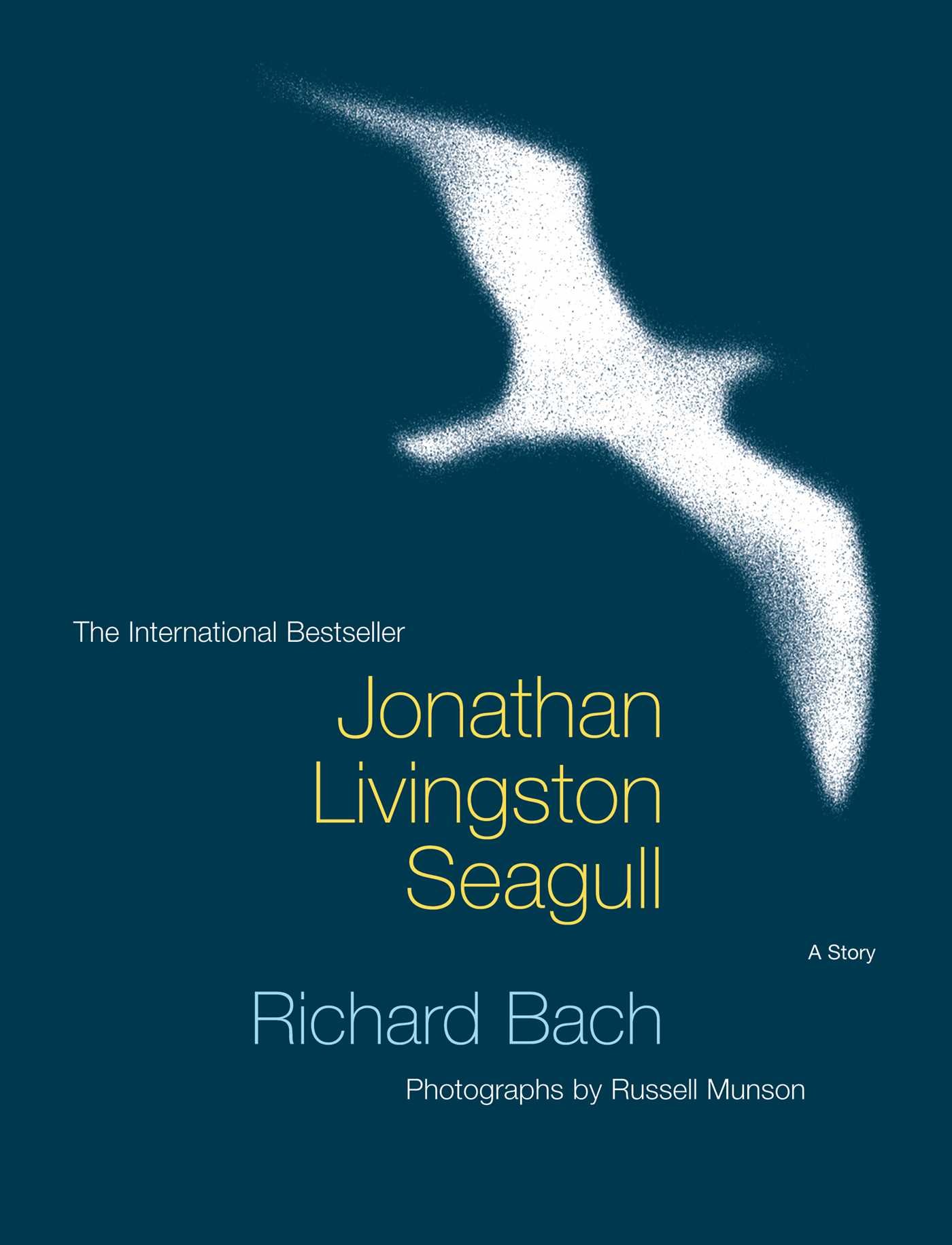
Jonathan Livingston Seagull- SImple yet abstruse.


Image result for jonathan livingston seagull


When I was child, one thing that used to excite me a lot was the word “simplicity.” The whole world wants sophistication and, in the process, we try to make a melange of things believe that the more enigmatic our work looks, the more prolix our speeches are, the more will the world extol our intelligence. In fact, we commence measuring intelligence in terms of the affected airs of sophistication believing that the more elusive our work remains the more reverence will be rendered upon us. However, as we grow old, we understand that the most significant sophistication on earth is simplicity. Simplicity can only be the work of a genius. The only testimony that a genius can ever acquire is that of simplicity.

Though these things have always been pellucid to me, yet I could never fathom as to how one can take an idea as convoluted as life, then go on to take multiple aspects of an already-complicated idea and still compress the whole thing into an half-hour read. Had somebody told that to me before I got my hands-on Richard Bach’s Jonathan Livingston Seagull, I would have called that person a “scoundrel”, but after studying this simple yet extraordinarily abstruse book, I can say that everything is possible in the world.

Bach’s book is the shortest epic that you can ever find. His gumption to hunker down to a seemingly impossible task and excel at it unequivocally speaks for itself. Moreover, the themes in the epic (not book) are not random at all. They portray a complete cycle of life and then end with an optimism hinting at the continuum which reinvigorates life back to semblance of commencement.

The epic starts with rebellion. It initiates the process with the depiction of how a one-in-a-million stands up to see farther than the trifles of life; how a person can come up to challenge the regimented life that we all live. Hardships and formidable impediments do come in their ways, but in the end, they trounce all the encumbrances to make sure that they move past the ordinary. However, we all know one thing, refusal is the reward that mediocrity gives to genius. The same happens here, these people are cloistered off and marked as pariahs because they chose to rise above the so-so level. The person who has been ousted finds its extremely strenuous and is not able to unravel what is happening because it is difficult to assimilate that you can be punished for your genius.

The epic goes on to the part where the aggrieved individual gets up and perfects himself and finally breaks the bonds with the world, and he who was once a common person has now evolved to something exceptional. But as you proceed to becoming exceptional, you understand the ignorance present in those regimented people and you go back to extricate those people from the shackles of conventions. Initially, you go as an unasked person but gradually some others who bear the same curiosity as you used to hold come forward and thus starts a novel procedure to annihilate all the manacles. As the process settles, a new problem arises. People start following you rather than the idea itself and against the wishes of the reformer, reform is made dwarf to the reformer. As the reformer leaves the stage, myths are created regarding the greatness of the reformer and the reform is lost somewhere. Conventions are again established and the same fetters start binding the society and the cycle is completed.

This whole process, when looked closely, is exactly how life proceeds ahead. The whole chain of events expounds the creation of legends, obliteration of conventions and then entrenchment of new conventions which finally completes the whole cycle of events. This incessant conveyor belt shows a sad yet true story of life and the beauty of Bach is, he shows it in less than a hundred pages.


JAI HIND, JAI BHARAT
JAI MA BHARTI

Saturday, 29 June 2019

Being Mortal- a story of human vulnerability and freedom.


There is a dearth of books which have the power to raze the status quo down to the ground and give the reader an uncanny tinge making them realize that the issues which have been mundane and prosaic to them are not so ordinary, one such book that stands out of the crowd and forces us to reflect on an issue which we have either never cared about or have been too petrified to look at is “Being Mortal” by Atul Gawande.

Human race, unskeptically, is a pretty peculiar race. We distinguish ourselves from other creatures on the basis of our superior cognitive, thinking and visualizing skills. We take up aims in our life, we plan almost everything pertinent to life be it time, love, marriage or life itself, but one thing about which we never worry is planning to die. The idea of old age or senility has been so much of a killjoy that in our whole history as the “superlative” race of the world, we never got the time or we never showed enough courage to think about how our life will end one day. We have hitherto never shown any concern about the day when everything will cease to exist for us and we for everything else; we have never had a dekko over how will the realization of mortality strike us one day and will make us realize that no matter how much great, charming or charismatic we have been, our end will not be very much different from anyone else. We just like every other creature are equally vulnerable to the arduous realities of nature.

Being Mortal thus hits at the right spot. It makes you peep over something which you have been snubbing off for so long and in this effort, it also touches upon how science and medicine have had their set of constriction.  One of the best apothegms that I have been told is that sometimes it is not life but the way of life that matters most to us. While loving our life and prizing it above anything else, we tend to put a blind eye to the way of life which in actuality holds more vitality than life itself. A famous proverb goes like this, “I have always lived in light, so what if I live for a day less.” Gawande’s book raises this important question through his medical experience. When old age strikes our door, it is not having white hair or wrinkled skin that people detest, it is an ineffably vexing feeling that we can no longer live life by our terms. Suddenly your freedom is snatch away from you and you are left being a dependent. In one moment, the ability to take decisions for oneself, the power to decide how we want our lifestyle to be shaped and the reassurance that we are not dependent on others are the major things that we adore in our life.
Every child wants to be an adult as soon as possible because children believe that being an adult gives us the opportunity to take our own onus and execute things that way we want. However, the present medicine world as well as the people themselves have not been able to unravel this naïve fact. Though it is not out of sheer ignorance that we disregard others freedom when they are old but because of our callow. We never worry about old age until it comes in our vicinity and hence when dealing with old people, we never figure out that one day the same situation would strike our door and we, too, would be standing there at the mercy of someone else’s decision. We put our old people is nursing homes and old age homes where they don’t have the basic freedom to decide what they want to eat, when we want to bathe and believe that we have done our best. But, if you think in terms of that person who is being made to go through all this, it is nothing less than incarcerating them in the name of their health. All through their lives, these people have made their own choices and now because of an impetuous decision of ours finally they are rendered paralyzed in their whole life. Nobody out there tries to fathom the reason behind their resentment and to conceal our own failures we term them dotards and their behavior a consequence of their senility. The purpose of all the sciences in the world is to make the human race independent. We developed Physics because we don’t want to be at mercy of nature, we developed medicine because we wanted to free ourselves of nature’s calamities, we develop Chemistry because we wanted to produce more than what’s in the nature. Human being, since the very inception of earth, has been in search of freedom but haplessly in this case, we spurn the needs of these people, treat their wants with contempt and finally subjugate themselves to live the life of a thrall. This deeply saddens me to see how good and callous we have become at doing this. Now, it has become customary to obliterate their freedom in the name of care and to annihilate their desires in the name of love.

Author also touches upon “when to let go of things.” Sometimes, while pursuing something, we become so much profoundly indulgent in it that we start thinking more about the procedure rather than the end goal we want. We become entangled in the process so much that we finally forget what our goal was initially. The same happens when one of our loved ones is fighting against an incurable disease. Though we know the outcome, yet owing to our incessant love for them, we make them suffer. We try different things which can ultimately make them live a month longer but will sequester themselves from what they used to be. Author gives the example of various patients in whose case it was lucid that they couldn’t survive, yet rather than accepting that fact that this unfortunate thing has happened with them, they try so many different treatments which though prolongs their life by a few days but trounces the very meaning of their life. They are left paralyzed, dependent and at the mercy of others just because we chose to refute that fact that we are not indomitable. Doctors too are guilty in this. They prescribe medicines, tell their patients about various options available but never ask them whether the patients are ready to incur the cost that will come up with these options. The work of a doctor is not just to blurt out some new fancy operations but to rather understand what the patient really wants, what would be the opportunity cost in their respect, are they indeed ready to put their freedom on altar for the sake of a few days. As a society, all of us fail in this regard, because in the end, having the freedom to steer our life to the very last breath is much more valued in anyone’s else. We need to sensitize ourselves with the fact that rather than imposing our decision on these people, we must let them die the way they have lived: bold, brave and independent. In the coming age of technology, rather than becoming more detached from their desires, we need to make sure that we get the essence of whatever they want, because if we don’t them somebody else would also follow the same course for us.
JAI HIND, JAI BHARAT
JAI MA BHARTI


Monday, 7 January 2019

SHRIMAD BHAGAVAD GITA ADHAYA 1- COLLECTION

That nobody can every decipher the sacred words of Bhagavad Gita is not a recondite fact yet "we continue to beat against the currrents." In the same manner, I too, am trying to unravel what I can to the best of my intellectual abilities which obvious fall extremely short of even understanding the mere words of the sacred conversation between Lord Krisna and Arjuna. So, here is the first part of 


JAI HIND, JAI BHARAT
JAI MA BHARTI

Sunday, 6 January 2019

52 years of unparalleled writing.


Salman Rushdie unequivocally avows the following for this exceptional piece of work:
“The greatest novel in any language of the last fifty years”


And I won’t dare digress a whit from this statement. The insuperable amalgamation of magic and realism that Gabriel Garcia Marquez endues to this novel is nothing less than an imperishable incantation. Moreover, the pain, the pleasure and especially the solitude as expounded in the novel seems so much realistic and every serious reader would have a predilection to fall into the cobwebs of Marquez’s unparalleled imagination.

This novel is for everyone. The contours of the book seem boundary-less for the books encompasses all sorts of human emotions. Be it obsession, love, discovery, pain, abhorrence, lust or envy, everything has a special place in this figment of Marquez’s ingenious thought. And above all nothing can be as incisive to a reader as is the pain of solitude that Marquez has imbued his characters in. The most intriguing thing about the story is that there is no convoluted plot, no hidden subterfuge and no awe-inspiring ruses but the mere reality of the human life and how we all evolve to fall slowly but certainly into the abyss of solitude. Besides that, there is no protagonist in the whole story. Every character is special for every person in the story no much how much extraneous he/she seems to appear in the inception, is indispensable and goads out a wide range of different feelings in the character.

The simplicity of the story is the first thing that will catch you eye. It seems to belong to us all, it has human desires and concocted fantasies, it foments emotions and sometimes also shows how much impassive and nonchalant the world can be. Also, one more thing that truly corroborates Marquez’s exception story-telling ability is his deft virtuosity at maneuvering your emotions. The thing that stupefied me most was that the author has indited the plot in such a way that he can make you loathe or love a character at his whim, whenever he wants he can give you reasons to deplore one particular characters and just after turning some more pages, he can give you substantial reasons to feel sympathy and love for the same character. Such is the greatness of Marquez’s writing that we you end reading the novel, your arbitration skills at judging the characters of the actors will be clobbered and what will be left will be serene reverence for Marquez and a feeling of melancholy making you realize the harshness and asperity of solitude.

Image result for one hundred years of solitude

Nobel Prize in Literature (1982) winner Gabriel Garcia Marquez


Solitude, as obvious from the title, is the most significant theme of the whole book. Every character here is condemned to solitude throughout his life. And here Marquez takes out a very vital issue. Solitude as per Marquez’s characters is not the absence of people around, solitude is not being solitary but solitude is being so much indifferent to others and that we stop living itself. None of the character is the novel is living, they are all surviving and compounded by their great life expectancy, all of them are living lives of complete solitude. Every person has immured himself in solitary confinement and sheer breakdown in their life generates pathos in the mind of the every reader. Yet in between we find glimpses of realism where we realize that we too as part of this techno-savvy generation are part of the same canker. In this age of technology, we have so many ‘friends’, yet no one to talk to; we have so many who know us, yet no one who understands us; so many who meet us, yet no one to share our feelings; so many who talk with us, yet no one who believes in us. This sheer similarity between Marquez’s magnum opus truly invokes a sense of profound respect for the deceased author. It seems as if this 1967’s novel could peep into this 21st century’s melee and taunt us all with its sharp similarity to the present day world. All of us today are feeling the pain of solitude that has been edified in the book. Just as the advent of new technologies in Macondo village (fictional village where the whole plot is set) widened the cleft between people so is the present rise of the technological juggernaut is doing to the current generation. Our geographical and spatial distances have been curtailed to a great extent, yet our emotional distances have developed deep chasms. On one hand, we have made communication possible, yet on the other hand we are excommunicating ourselves from the world. Our basic lifestyle has unskeptically ameliorated, but whether the quality of our life has followed the same trend is a question worth musing. Technology is not the culprit here, in fact, we are the ones who are banishing ourselves from the world. We too have transfixed ourselves just like Marquez’s characters and this engenders in every reader a feeling of grave poignancy.

The downright analogy between ours and Macondo’s time is enough to horripilate any conscientious reader. One thing to learn from Macondo would be that it is high time we rectified ourselves otherwise the same fatalism and perdition that ensued for Macondo would follow the suit for our own society. We need to accept that human being can’t survive alone and the way we are confining ourselves would one day do nothing less than asphyxiating us through our own hands and then when we will decipher the whole code in the end, it would be a lost cause (just like Aureliano’s) and a hurricane would blow everything away.

JAI HIND, JAI BHARAT
JAI MA BHARTI

Saturday, 5 January 2019

Shrimad Bhagavad 2.20,2.21,2.22


य एनं वेत्ति हन्तारं यश्चैनं मन्यते हतम्।

उभौ तौ न विजानीतो नायं हन्ति न हन्यते।।2.19।।
Whosoever views this to be the slayer and whosoever believes this to be the slain, both these do not understand: This does not slay, nor is this slain.
-----------------------------------------------------------------------
न जायते म्रियते वा कदाचि

न्नायं भूत्वा भविता वा न भूयः।

अजो नित्यः शाश्वतोऽयं पुराणो

न हन्यते हन्यमाने शरीरे।।2.20।।
This is neither born; nor ever dies; nor, having not been at one time, will this come to be again. This is unborn, destruction-less, eternal and ancient and is not slain [even] when the body is slain.
 -----------------------------------------------------------------------
वेदाविनाशिनं नित्यं य एनमजमव्ययम्।

कथं स पुरुषः पार्थ कं घातयति हन्ति कम्।।2.21।।
Whosoever realizes this to be changeless, destruction-less, unborn and immutable, how can that person be slain; how can he either slay [any one]? O Partha!
----------------------------------------------------------------------- 
वासांसि जीर्णानि यथा विहाय

नवानि गृह्णाति नरोऽपराणि।

तथा शरीराणि विहाय जीर्णा

न्यन्यानि संयाति नवानि देही।।2.22।।

Just as rejecting the tattered garments, a man takes other new ones, in the same way, rejecting the decayed bodies, the embodied (Self) rightly proceeds to other new ones.
-----------------------------------------------------------------------
Here the lord goes on to reveal some primordial and vital veracious facts about life. He avers that the ‘atman’, the conscious that can never be destroyed, its power is ineffable, its existence irrefragable, its basis incontrovertible, its realm unfathomable. It stands as destruction-less, no force can clobber it, nothing can make its grandeur totter, nothing can transmute it and nothing can ever pervade its contours. Lord avers that the atman is insurmountable. Infernos are inefficacious in torching it, even death can’t slay it and apocalypses can’t annihilate it. It remains aloof from the bounds of our imagination for we can’t gauge its depth neither can we ever unravel its gravity. But one things remains constant: it changes from one form to another, one life to another. Just as the human beings change clothes so does the Atman change its dwelling and goes on to reside in some new abode. Moreover, Lord says that if nobody can kill it then why should we be despondent over other’s demise, if nothing can produce it why should be ecstatic over someone’s birth. For the Atman’s existence is far beyond the reach of human, why should we deem ourselves as the slayer or the producer of the same. Something that is neither bound by the space nor by the time and can’t be decimated and can never be begotten. One should accept the limits of mankind and should forsake the egoist notions that one is the architect of the soul. As long as we cling to these prejudiced notions, we will not be able to the limpid reality and will thus continue to fall in the cobwebs of our thoughts. Those who can’t see the lucid truth of the existence of Atman will never be able to feel one with their existence and thus their spirit will continue to wander in confusions and life would seem too arcane and recondite. Rather than fighting the supremacy of Atman, we should rather connect with it and the first step to connect with it is through acknowledging its eternity and existence.

JAI HIND, JAI BHARAT
JAI MA BHARTI


Friday, 28 December 2018

Shrimad Bhagavad 2.16,2.17,2.18


नासतो विद्यते भावो नाभावो विद्यते सतः।

उभयोरपि दृष्टोऽन्तस्त्वनयोस्तत्त्वदर्शिभिः।।2.16।।
Birth (or existence) does not happen to what is non-existent, and destruction (or non-existence) to what is existent; the finality of these two has been seen by the seers of the reality.
-----------------------------------------------------------------------
अविनाशि तु तद्विद्धि येन सर्वमिदं ततम्।

विनाशमव्ययस्यास्य न कश्िचत् कर्तुमर्हति।।2.17।।
          And know that to be destruction-less, by which all this (universe) is pervaded; no one is capable of causing destruction to this changeless One.
-----------------------------------------------------------------------
अन्तवन्त इमे देहा नित्यस्योक्ताः शरीरिणः।

अनाशिनोऽप्रमेयस्य तस्माद्युध्यस्व भारत।।2.18।।
These destructible bodies are said to belong to the everlasting, indestructible, indeterminable, embodied One. Therefore, O descendant of Bharata, join the battle.
-----------------------------------------------------------------------


Here the Lord gainsays about presumptions of life by saying that life is like an ethereal gossamer with no inception and no denouement. This thread has unfathomable depth and insuperable altitude, yet it begins where it ends and ends where it commences. It never ceases to stop and can’t be made to capitulate to the worldly forces. Its existence is not questioned by the influence of nature, nor can its sanctity be contravened by the human actions. That which has ever been begotten can’t be debilitated in any manner, that which has never been engendered can’t be created through any process, the world we live in is constant, all of us tergiversate from one body to another. Wherever there is death, somewhere else life will sprout us as a consequence because as per the Lord, death is nothing but the inception of a new form of life. Those who believe that demist symbolizes a coda of a human life will always be eluded by the veracity of the universe, because death is nothing but a catapult for new life. In this world nothing biotic can be expunged, it can only be made to change its countenance. This is the ultimate truth of life. Those who can console them to accept this truth will never achieve the covetous unity with the atman, they will continue to see disparity in processes which are inherently coherent, they will continue to see anachronism in process which are innately coeval, and this will continue to produce various philosophical and emotional imbroglios and mires for them. For they are restraining themselves from seeing the reality, only pain and self-meditated notions would be visible to them and thus redemption will never come.
The incessant process of transformation of lives and the truth of confluence of pleasure and pain, love and hate, life and death, unity and disparity, inception and destruction are the only truths of life that a man must acknowledge and concede to. Though at first these things seem plumb opposite to each other, yet they complement each other like none other. Deeming them in the manner that the Lord prescribes will be an arduous task because there is nothing as strenuous as steering one’s own thoughts and mind at one’s command. Since we have inured ourselves to the convention of watching these things as opposite to one another, we must unlearn our facile knowledge, flay off our sense of insecurity through regular scholarship and then only we will be able to reconcile those differences in our own heart. I must warn you beforehand that this is going to be a formidable journey replete of hindrances and difficulties. For we are acclimatized to celebrate birth and mourn death, sing praise for origination and lament for the end, it would be extremely difficult to get the reigns of our emotions. You can infer about the challenge posed by this task by thinking of the yogis. The only truth that a yogi needs to learn is hidden in these three shlokas, yet our human predilections and subconscious mar our progress and curb our amelioration and thus make it very difficult to conquer our mind.
It is only through constant practice and toil that we will be able to clobber our base instincts and reach the supreme truth of the universe that Lord wants us to recognize.

JAI HIND, JAI BHARAT
JAI MA BHARTI


Thursday, 27 December 2018

Shrimad Bhagavad 2.13, 2.14, 2.15


देहिनोऽस्मिन्यथा देहे कौमारं यौवनं जरा।

तथा देहान्तरप्राप्तिर्धीरस्तत्र न मुह्यति।।2.13।।
2.13. Just as the boyhood, youth and old age come to the embodied Soul in this body, in the same manner is the attaining of another body; the wise man is not deluded at that.
----------------------------------------------------------------
मात्रास्पर्शास्तु कौन्तेय शीतोष्णसुखदुःखदाः।

आगमापायिनोऽनित्यास्तांस्तितिक्षस्व भारत।।2.14।।
2.14 But the contacts of the organs with the objects are the producers of cold and heat, happiness and sorrow. They have a beginning and an end, (and) are transient. Bear them, O descendant of Bharata.
---------------------------------------------------------------
यं हि न व्यथयन्त्येते पुरुषं पुरुषर्षभ।

समदुःखसुखं धीरं सोऽमृतत्वाय कल्पते।।2.15।।
2.15. O the best among persons! That wise person becomes immortal whom these (situations) do not trouble and to whom the pleasure and pain are equal.


The lord commences by carving out the distinction between the body and the atman, between our senses and our consciousness and tells that thought may seem indiscernible, yet the gravity of discreteness is them can’t be eschewed. He tells us that just like the aging process of a body the soul too is going through a metamorphosis. As we grow from an infant to fall into the laps of senility, so too the soul is transmuting from one form to another. Nature teaches us that the world progresses by evolution; that species mould themselves to make themselves comme il faut for the time; that the only everlasting thing in the world is evanescent change; that if we don’t prepare ourselves to nestle in the cast of befitting time, we will be vanquished and clobbered by the forces of nature itself. Similarly, Lord tells us that soul is also not excused from the process. Change is ineluctable, though in some cases it is momentarily and in others extremely protracted. Furthermore, Lord edifies that all the emotions and sentiments that we believe are part of our soul and consciousness are not at all any integral part of our emotions. They are just ephemeral stimulation of our external organs and nothing carries enough power to transfix our soul. Our biggest mistake is to believe that we comprise of our emotions, notwithstanding knowing that they will pass sooner or later, we linger onto them and cling to them thinking that they are indispensable. This folly makes us to go through the ups and down of emotions through which those who know the truth of atman are not made to go through. They are never made to tread the formidable path being administered by our emotions and external stimuli because they know that these things are mere illusions created by the body and our impervious soul is not bound by them. Thus Lord asks Arjuna to be unfazed by death and life, grief and merry, hate and love, loath and certainty, indecision and decision, evolution or decadence, equivocation or vehemence. He asks him to concede to the cardinal truth of life that atman is above all and nothing carries enough competence to penetrate the atman. In fact, Lord even goes further to say that those who snub pain and pleasure equally are immortal. That is so because, when we stop dwelling over the matters of our destructible body and raise above the trifles of the external world, silence pervades inside us all. When this silence is further strengthened by our equanimity, nonchalance and indiscrimination, it leads to our unification with the atman and since atman is adamantine, we rise above the bagatelle to become immortal. Immortality thus, comes after accepting that our body is a mere apparel and our soul is what we are made up of.       

JAI HIND, JAI BHARAT
JAI MA BHARTI